How MBC Supports the CCBHC Model
The national average wait time for mental health or substance use care is 48 days. At Certified Community Behavioral Health Clinics (CCBHCs), it’s often a week or less.
Expanding access to timely, comprehensive behavioral healthcare is central to the CCBHC model. More than 500 now operate across 46 states, serving over 3 million people. They are required to serve anyone who needs care, regardless of their ability to pay, location, or age, and they offer crisis support around the clock.
As the model expands and adoption accelerates across the US, it’s becoming even more critical that CCBHCs can demonstrate that the care they offer is consistent, effective, and continuously improving. For CCBHCs, this means building systems that support clinical quality, meaningful outcome measurement, and ongoing performance improvement across the organization.
Measurement-Based Care (MBC) plays a important role in making that possible.
Let’s take a closer look at the CCBHCs model, its quality and reporting expectations, and how MBC can help organizations deliver on them.
Greenspace and the National Council for Mental Wellbeing
Webinar: From Compliance to Quality: How Measurement-Based Care Empowers CCBHC Success, taking place December 3, 1-2 PM ET
Register NowWhat is a CCBHC?
A Certified Community Behavioral Health Clinic is a behavioral health organization that meets a specific set of federal certification criteria established by SAMHSA.
The model was established in 2014 and the first clinics opened in 2017, designed to address longstanding gaps in community-based behavioral health services. CCBHCs provide comprehensive, coordinated mental health and substance use services to people of all ages, regardless of their ability to pay or place of residence.
CCBHCs must provide access to nine core services, either directly or through designated partner organizations:
- 24/7 crisis services
- Outpatient mental health and substance use services
- Person- and family-centered treatment planning
- Intensive, community-based mental health care for veterans
- Peer, family support, and counselor services
- Targeted care management
- Outpatient primary care screening and monitoring
- Psychiatric rehabilitation services
- Screening, assessment, and diagnosis, including risk assessment
Beyond providing these services, CCBHCs must demonstrate that they are delivering accessible, coordinated, person-centered care while continuously evaluating and improving its quality.
This creates a unique operational challenge. CCBHCs serve diverse populations with complex needs, often across multiple programs, care settings, and provider teams. Maintaining visibility into how people are progressing, whether treatment is effective, and where improvements are needed requires a consistent approach to measuring outcomes across the organization.
Why CCBHCs Matter
CCBHCs have become an important part of efforts to expand access to high-quality behavioral healthcare across the United States.
The impact is evident in both access to care and healthcare utilization:
- CCBHC certification enables clinics to serve approximately 13% more people, and Medicaid-funded CCBHCs serve approximately 33% more clients
- CCBHCs often provide access to mental health and substance use care within a week or less, compared to the national average wait time of 48 days
- In Missouri, the number of patients served by CCBHCs has increased by 94 percent since 2017, while hospitalizations and ER visits have been cut nearly in half
As more states and organizations adopt the model, maintaining these improvements while demonstrating consistent care quality becomes increasingly important.
Understanding CCBHC Quality and Reporting Requirements
A defining feature of the CCBHC model is its emphasis on accountability and continuous quality improvement.
Under SAMHSA’s certification criteria, CCBHC are required to develop and maintain an effective, continuous quality improvement plan (CQI). This includes routinely reviewing clinical outcomes and organizational performance, and implementing changes that will improve the quality and timeliness of services. The CQI plan must be data-driven, drawing on both quantitative and qualitative data across clinical care and reporting requirements.
CCBHCs also have specific quality measurement and reporting obligations. These include standardized measures designed to evaluate areas such as access to services, screening practices, and clinical outcomes.
For example, required clinic-collected measures include:
- Depression Remission at Six Months (DEP-REM-6): Evaluates the proportion of eligible individuals with depression who achieve remission within the specified follow-up period.
- Screening for Clinical Depression and Follow-Up Plan (CDF-AD/CH): Measures whether eligible individuals receive appropriate depression screening and, when indicated, a documented follow-up plan.
- Screening for Social Drivers of Health (SDOH): Evaluates whether individuals are screened for social factors that may affect their health and access to care.
- Time to Services (I-SERV): Measures how quickly individuals can access services following their initial contact with a clinic.
These measures represent only part of the broader CCBHC quality framework, with additional reporting requirements depending on the applicable program and state.
Meeting these expectations requires organizations to collect accurate, standardized data while maintaining clinical workflows that support effective care delivery.
But quality measurement also presents an opportunity that extends beyond reporting. When clinical data is consistently collected and meaningfully used, it can help organizations understand where care is working, identify patients who may need additional support, and make informed decisions about improving services.
For many organizations, doing so demands substantial investment in data infrastructure, workforce capacity, and clinical workflows. Organizations that are newly certified or actively expanding need to figure out how to build that infrastructure in a way that is both manageable and meaningful.
Where Measurement-Based Care Comes In
Measurement-Based Care is, at its core, a clinical practice that involves routinely collecting patient-reported outcome measures, sharing those results with clients, and using the data to inform clinical decisions and adjust care. It is evidence-based, transdiagnostic, and applicable across the full range of services that CCBHCs are required to provide.
For CCBHCs, MBC offers a practical framework for connecting individual clinical care with broader organizational quality improvement.
In fact, CCBHC certification criteria explicitly reference the use of MBC to improve service outcomes as part of the data-driven continuous quality improvement requirements.
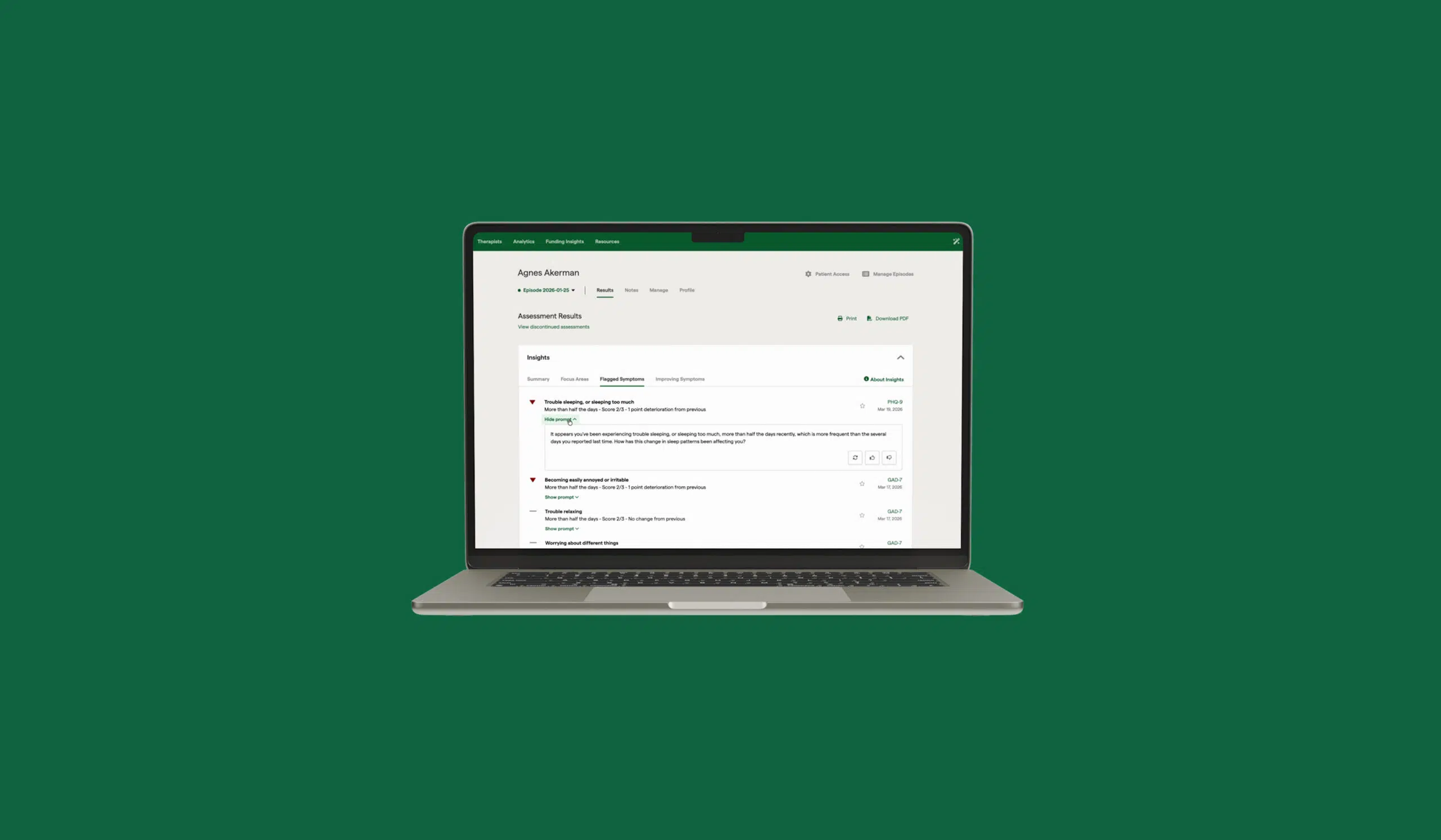
When supported by purpose-built technology, MBC can help CCBHCs integrate consistent outcome measurement into everyday clinical workflows while making that information accessible to clinicians, supervisors, and organizational leaders.
Here is what that looks like in practice:
Consistent service delivery: When clinicians are routinely collecting outcome data and using it in session, care becomes more consistent across providers, programs, and populations. Clinicians have a structured way to track how clients are doing over time, identify when treatment is not working, and adjust their approach before problems become crises. That consistency is exactly what CCBHC certification is designed to promote.
Continuous quality improvement: The aggregate data generated by MBC is the raw material for meaningful CQI. When outcome data is collected consistently across an organization, clinical leaders can identify patterns, compare programs, flag outliers, and make data-informed decisions about where to invest resources and where to change course. Without that data, quality improvement is largely anecdotal.
Quality reporting: MBC data, when structured and collected through a platform that integrates with clinical workflows and reporting systems, can directly support the quality measure reporting that CCBHCs are required to submit. Organizations that have built strong MBC infrastructure are often better positioned to meet reporting requirements because they are already collecting the right data in a consistent, structured way.
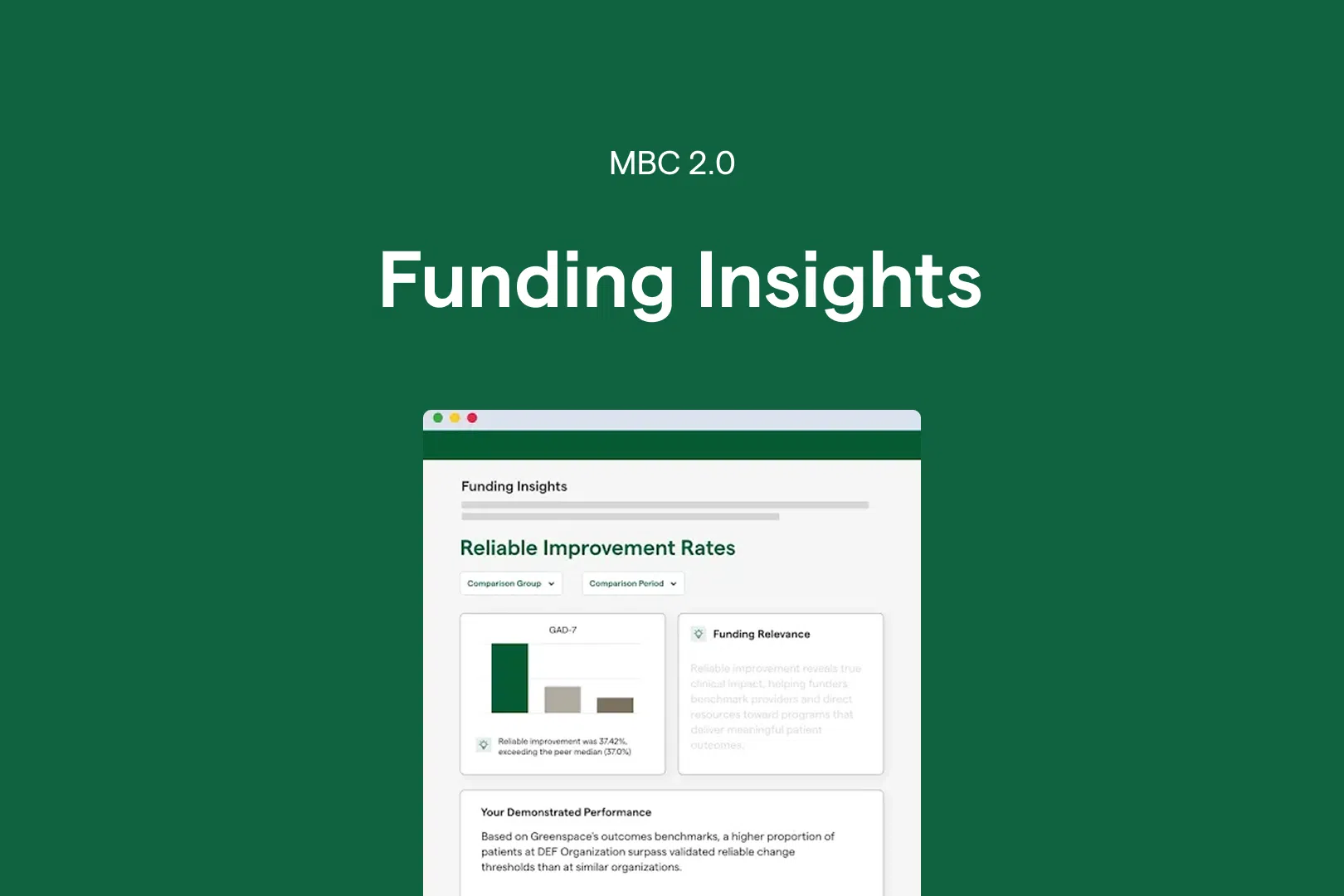
Demonstrating the impact and value of care: CCBHCs must continually demonstrate the value of their services to state agencies, funders, community partners, and other stakeholders. MBC technology can help organizations communicate that value through measurable clinical outcomes, including symptom improvement, recovery, and changes in functioning. For CCBHCs participating in Medicaid demonstration programs, quality performance can also have financial implications through state-defined quality bonus payment arrangements.
The Gap Between Collecting Data and Using It
CCBHCs already collect significant amounts of information through assessments, clinical documentation, EHR systems, and required reporting processes. The opportunity is to make that information more useful in everyday care.
A standardized assessment can help fulfill a reporting requirement, but its clinical value grows when the results are shared with patients, discussed during treatment, and used to guide decisions about what happens next. This is where Measurement-Based Care can make a meaningful difference.
By connecting routine outcome measurement with clinical decision-making, MBC helps organizations establish a continuous feedback loop between patients, providers, and leadership.
At the individual level, clinicians gain better visibility into patient progress and opportunities to adjust treatment. At the organizational level, leaders gain a clearer understanding of care quality, clinical outcomes, and where improvement efforts can have the greatest impact.
For CCBHCs navigating growing expectations around access, quality, and accountability, this creates an opportunity to strengthen both the care they deliver and their ability to demonstrate its impact.
The next consideration is how to implement MBC effectively across the complexity of a CCBHC, from clinical workflows and provider engagement to technology integration and organizational adoption.
Join the Conversation
On December 3rd, Greenspace Health and the National Council for Mental Wellbeing are hosting a live webinar, From Compliance to Quality: How Measurement-Based Care Empowers CCBHC Success. Panelists will share the policy and practice landscape shaping CCBHC quality expectations, the strategic case for MBC, and a real-world look at implementation in a certified CCBHC.
Whether your organization is newly certified, actively expanding, or still exploring what CCBHC designation could mean for your programs, this session will offer practical guidance on how MBC can support better outcomes, informed treatment, and clinical excellence.
Register now: From Compliance to Quality: How Measurement-Based Care Empowers CCBHC Success
December 3rd | 1:00 – 2:00 PM ET