IWK Health: Building a Meaningful, Organization-Wide Approach to Measurement-Based Care
For IWK Health, implementing Measurement-Based Care (MBC) was a path to creating a more collaborative, responsive, and transparent care experience for clients, clinicians, and leadership alike. By collecting client-reported outcomes, care teams can better understand whether treatment is helping, identify when changes may be needed, and support meaningful conversations about progress. IWK Health has embedded MBC across multiple mental health programs serving children, youth, and perinatal populations, achieving exceptionally strong engagement and adoption while maintaining a clear focus on the therapeutic value of measurement in the room.
“We want to make sure that we’re really focused on using these tools in a meaningful, collaborative way. If we’re not using it relationally with clients, simply collecting information on its own doesn’t actually yield benefits.”
— Dr. Stephanie Snow, Psychologist and Advanced Practice Lead at IWK Health
Supporting a Complex Ecosystem of Mental Health Services
IWK Health supports a wide range of mental health services across Nova Scotia, including outpatient, intensive, inpatient, and perinatal mental health programs. Their services span from early intervention and moderate mental health concerns through to more acute and intensive care needs for children, youth, and birthing persons.
As the organization expanded its MBC strategy, leadership recognized that measurement practices already existed in pockets across the system, but implementation varied significantly depending on professional training, comfort with outcome measures, and workflow realities.
Before Greenspace, many clinicians relied on paper-and-pencil measures, manually scoring assessments and building their own spreadsheets to visualize progress. While some clinicians had developed strong practices independently, the organization saw an opportunity to create a consistent, scalable approach that could support meaningful MBC implementation across teams and programs.
According to Dr. Snow, one of the biggest opportunities was creating a shared measurement feedback system that could make outcome conversations easier and more accessible within the realities of clinical care.
“The biggest opportunity was having a measurement feedback system that allowed for that quick visualization to support communication with our clients. Particularly for children, youth, and families, it’s the picture that’s more meaningful than the numbers and that was definitely a big reason for pursuing this in a different way, so that it could become more accessible across the board.”
— Dr. Stephanie Snow, Psychologist and Advanced Practice Lead at IWK Health
Keeping the Focus on the Therapeutic Relationship
From the beginning, IWK Health intentionally framed MBC as a clinical communication tool first. Their implementation strategy centered on the idea that measurement should strengthen therapeutic relationships, elevate client voice, and support collaborative care conversations in-session. Organizational reporting and system-level insights were recognized as powerful additional benefits that would help drive planning, quality improvement, and service delivery.
The biggest opportunity was having a measurement feedback system that allowed for that quick visualization to support communication with our clients. Particularly for children, youth, and families, it’s the picture that’s more meaningful than the numbers and that was definitely a big reason for pursuing this in a different way, so that it could become more accessible across the board.
“Our hope is that if we’re doing this reliably and consistently at the point of care, we’re able to hear clients when things are working and reinforce that. And when things are not working, how do we use [MBC] to lean in, understand barriers, and try to unstick them?”
— Dr. Stephanie Snow, Psychologist and Advanced Practice Lead at IWK Health
This philosophy also shaped how IWK Health approached organizational data governance and clinician engagement. The organization developed formal data-use guidelines to ensure MBC data would never be used punitively or tied to clinician performance management. Instead, clinician-level insights were positioned as tools for reflective practice, professional growth, and learning.
A Multi-Layered Implementation Strategy
IWK Health’s implementation approach extended far beyond simply introducing a new technology platform. The organization redesigned clinical workflows, updated consent and documentation processes, embedded MBC into staff orientation and training, invested in collaborative in-session technology, and created ongoing coaching and skill-building opportunities for clinicians.
Importantly, implementation was supported consistently across all levels of leadership.
“Being really clear and consistent on the why, and having that supported from executive leadership all the way down to our team leads, was critical.”
— Dr. Stephanie Snow, Psychologist and Advanced Practice Lead at IWK Health
IWK Health also established audit-and-feedback processes focused specifically on engagement with MBC practices rather than clinical outcomes. Teams regularly review adoption and usage patterns collaboratively to identify barriers, share successes, and provide additional support where needed.
IWK Health also regularly highlights clinician and client stories internally to demonstrate how MBC is shaping conversations, uncovering new insights, and supporting meaningful therapeutic moments.
Achieving Strong Engagement and Meaningful Outcomes Across Programs
As they continue to expand across programs, IWK Health continues to promote exceptionally strong adoption across its mental health services. The organization’s data within Greenspace tells a compelling story about client engagement and therapist adoption of the platform:
- Approximately 60,000 assessments completed with Greenspace
- More than 10,000 clients added to the platform
- More than 100 therapists onboarded
- 98% client integration and adoption (i.e. the percentage of clients added to Greenspace who have completed at least one assessment).
- 88% therapist adoption (i.e. the percentage of therapists with at least one patient that has completed at least one assessment).
- 25% of active clients completing 10 or more assessments
Dr. Snow emphasized that these results did not happen automatically. “Without an implementation plan, the literature suggests only about 20% of providers engage in measurement-based care,” she explained. “So, we’ve come a long way.”
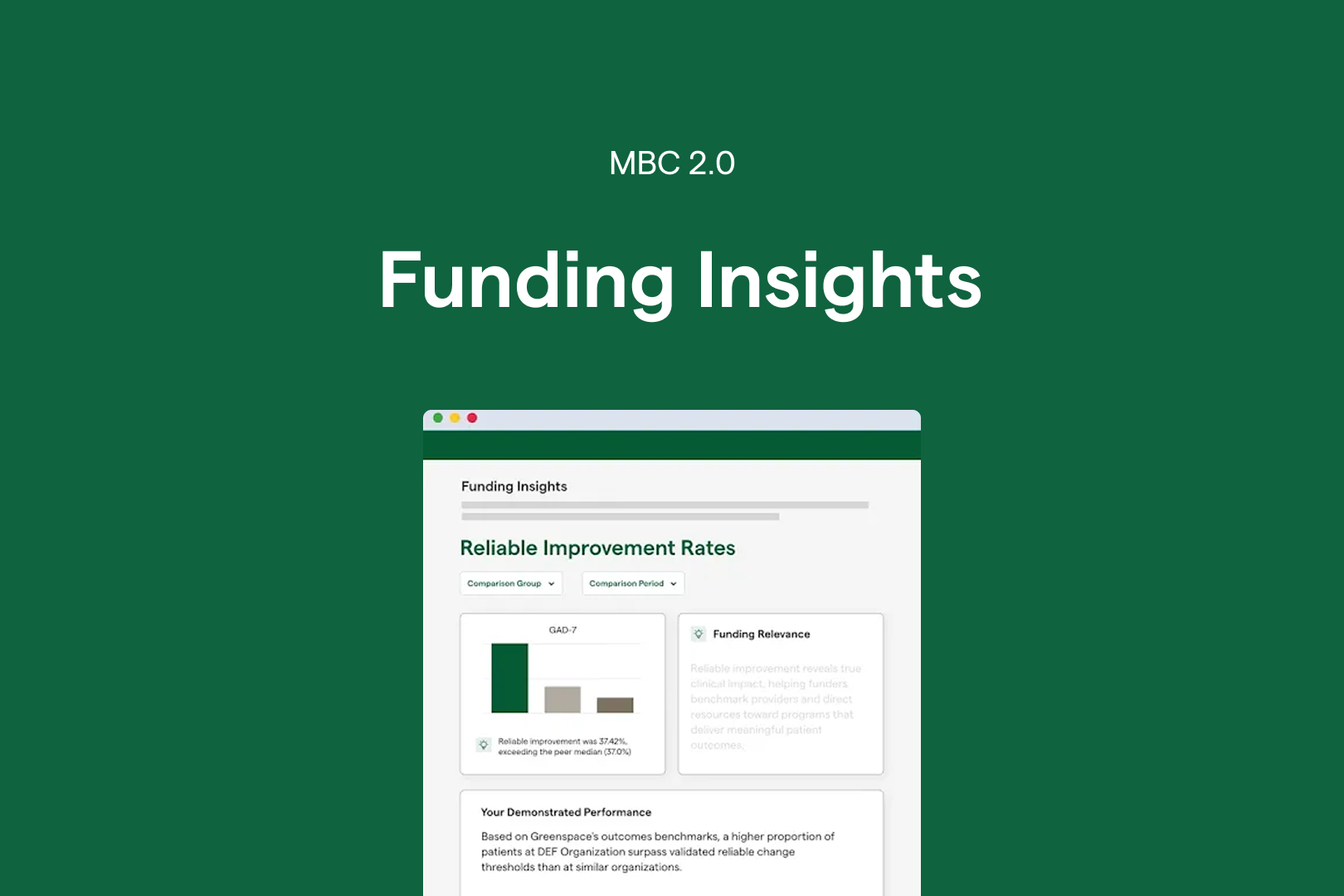
Beyond engagement, IWK Health has also demonstrated strong clinical outcomes aligned with international benchmarks. Within its largest outpatient mental health service, outcomes meet or exceed benchmarks from comparable organizations in the UK.
Building Flexibility for Diverse Clinical Needs
As IWK Health’s MBC practice matured, the organization also uncovered an important insight: successful implementation requires flexibility.
While digital workflows streamlined assessment delivery and visualization, clinicians occasionally identified situations where paper-and-pencil approaches better supported specific client needs. This became particularly important when working with neurodiverse youth or clients who engaged differently with numbers and rating scales.
Dr. Snow described one clinician who adapted a standard 0–10 scale into chess pieces to better connect with a youth client’s interests and communication style.
“Clinical practice needs to drive these systems, not the limitations of technology driving how clinicians work. We need to be responsive to the diversity of the populations we serve.”
— Dr. Stephanie Snow, Psychologist and Advanced Practice Lead at IWK Health
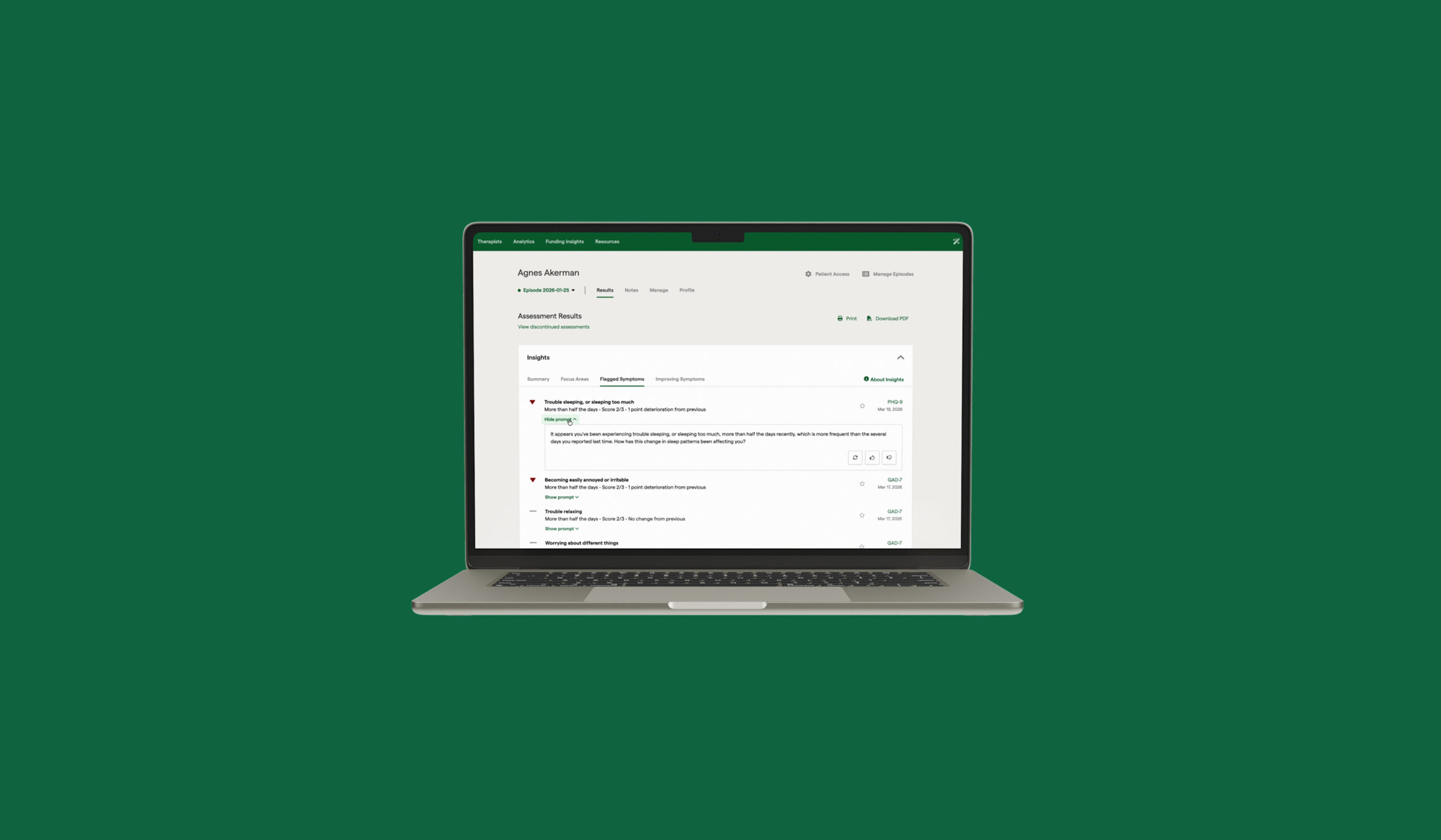
This collaborative approach has also shaped IWK Health’s use of Greenspace’s customizable insights capabilities, allowing the organization to align platform language, prompts, and workflows with its own philosophy and clinical approach.
What Comes Next
Looking ahead, IWK Health is now focused on deepening clinical integration and helping MBC feel increasingly natural within therapeutic practice. The organization is reintroducing fidelity and coaching processes to support clinicians in using measurement more fluidly and organically within sessions.
“Some clinicians still feel like it’s something they’re doing on top of the work,” said Dr. Snow. “We really want to support them in integrating it so it feels fluid and embedded in the therapeutic process.”
At the same time, IWK Health continues expanding MBC across additional care teams and programs while maintaining the intentional, collaborative approach that has defined the initiative from the beginning.
“It has to be meaningful and intentional for it to be sustainable,” Dr. Snow reflected. “If it’s perceived as a performance management tool rather than something that supports better care, we lose what makes it most valuable. It has to really live and take on a life of its own within the system.”
Schedule a call with an implementation specialist to see how MBC can meaningfully improve engagement and outcomes at your organization.