As the CMS Innovation Center’s ACCESS Model approaches launch (initial application period extended to May 15, 2026), many mental health organizations are navigating questions around eligibility, requirements, and how this model fits within their existing services and strategy. This high-level overview breaks down the ACCESS Model, clarifies key components, and highlights what organizations should be thinking about as they evaluate participation. If you have questions or want to explore what this could look like in your setting, our team is always happy to connect.
Key Takeaways
- CMS’s ACCESS program introduces outcome-aligned payments (OAPs), tying reimbursement directly to measurable clinical improvement in depression and anxiety
- Built to evaluate and scale, tech-enabled behavioral health models, rather than traditional fee-for-service care
- Enables organizations to reach individuals earlier and at scale, including those not currently accessing services or on waitlists
- Measurement-Based Care is a critical component to ensure baseline assessment capture, ongoing outcome tracking, and clinical outcome reporting as well as proxy performance indicators for organizations. Requires ongoing measurement and reporting using validated tools (eg. PHQ-9, GAD-7)
- Success depends on population-level outcomes and audit-ready measurement infrastructure
- Creates a new pathway for sustainable, outcomes-driven revenue
The CMS Innovation Center’s ACCESS Model introduces a fundamental shift in mental health delivery and reimbursement. At its core, ACCESS ties payment to demonstrable, clinically meaningful improvement in conditions such as depression and anxiety, measured through validated tools like the PHQ-9 and GAD-7. This moves beyond traditional service-based models and creates a clear expectation: organizations must not only deliver care, but demonstrate that it is improving outcomes.
ACCESS introduces Outcome-Aligned Payments (OAPs), where reimbursement is directly tied to clinical improvement rather than service volume. The model provides approximately $180 per patient annually and limits overlapping fee-for-service billing. It is not designed to replace existing services, but to support new, scalable models of care that can reach broader populations efficiently.For organizations, this represents both a new revenue opportunity and a requirement to deliver measurable outcomes at scale.
Expanding Access Beyond Traditional Care Models
Demand for mental health services continues to exceed capacity. Many individuals with mild-to-moderate needs never access care, while others wait weeks or months to be seen. ACCESS provides a pathway to address this gap by supporting interventions that engage individuals earlier, including those on waitlists or not yet in care. This includes digital programs, structured condition management, and proactive outreach models that help stabilize symptoms before they escalate. And for organizations with long waitlists, this represents a meaningful opportunity to provide support now, rather than later and increase their service revenue.
A Model Built for Scalable, Tech-Enabled Interventions
The structure of ACCESS reinforces its focus on scalability and reach. Rather than funding individual therapy sessions, the model supports programs that can be delivered efficiently across large populations.
In practice, this may include:
- Self-guided or digitally delivered interventions
- Low-intensity, protocol-driven care models
- Hybrid approaches combining digital tools with light-touch clinical support
- Population-level screening and condition management programs
These models allow organizations to extend support to individuals who may not require high-intensity services or would not otherwise be able to access support due to capacity constraints, while maintaining structured, evidence-based care practices.
ACCESS Program Requirements and Participation Timeline
ACCESS applies to Original Medicare (Part B) and is open to eligible providers and suppliers who meet CMS participation requirements. To participate, organizations must operationalize a structured model of care that includes:
- Confirming a qualifying diagnosis (e.g., depression or anxiety)
- Establishing baseline measurement using validated tools>
- Developing and documenting a care plan
- Delivering ongoing condition management
- Monitoring symptoms at defined intervals
- Adjusting care and coordinating services based on outcomes
ACCESS is being rolled out in cohorts, with a clear timeline for early adopters:
- Applications opened: January 12, 2026
- First cohort deadline: Extended to May 15, 2026
- First performance period begins: July 5, 2026
- Next cohort begins: January 1, 2027, with rolling admissions thereafter
The model is expected to run through 2033, giving organizations time to design, test, and scale new approaches.
How Payment and Performance Work
ACCESS introduces a population-based performance model that differs meaningfully from traditional reimbursement. Mental health participants receive:
- $180 per beneficiary annually during the initial 12-month care period
- $90 per beneficiary annually in follow-on periods
Payments are made monthly based on submitted and validated claims, but the timing of when funds are received is structured as follows:
- Months 1-6: Participants receive 100% of the monthly installment payments for each aligned beneficiary
- Months 7–12: CMS continues monthly payments, but 50% of the total annual payment is withheld during this period
- End of year reconciliation: The withheld portion is reconciled after the 12-month care period based on performance through Clinical Outcome Adjustment and Substitute Spend Adjustment
This structure allows organizations to receive consistent early cash flow while ensuring accountability for outcomes over the full care period.
Performance is evaluated using:
- Outcome Attainment Threshold (OAT): the benchmark required to receive full payment (50% in Year 1)
- Outcome Attainment Rate (OAR): the percentage of beneficiaries who meet outcome targets
While performance is built from individual outcomes, payment is determined by aggregate results across the population. Organizations that fall below thresholds receive reduced payments, while downside risk is capped, creating a balanced model that encourages improvement without penalizing clinical complexity.
For example, if an organization serves 100 beneficiaries, it would receive approximately $18,000 annually ($180 per beneficiary). Of that, $9,000 is paid over the course of the first 6 months, with the remaining $9,000 withheld until the end of the initial care period. If performance meets or exceeds the Outcome Attainment Threshold (50% in Year 1), the organization receives the full $9,000. If performance falls below the threshold (e.g., 40% attainment), the withheld portion is reduced accordingly based on outcome performance and cost adjustments.
Measurement as the Foundation
Across all aspects of ACCESS, consistent measurement is not a supporting component of ACCESS, it is the foundation of the model. Organizations must be able to:
- Capture baseline assessments
- Track symptoms consistently over time
- Demonstrate clinically meaningful improvement using validated tools
- Produce audit-ready, standardized reports
Without this infrastructure, participation and performance under ACCESS are not feasible. ACCESS reinforces a broader shift from activity-based to outcomes-driven payment models; a shift that is already underway across the mental health industry.
Where Organizations Are Focusing
As organizations begin to operationalize ACCESS, two key approaches are emerging.
- Population Level Early Identification and Intervention: For individuals with low-moderate behavioural health challenges;
- Waitlist and Capacity Management at Scale: Expanding access by supporting individuals who would otherwise remain untreated, using screening, structured follow-up, and low-intensity or technology-enabled care models.
In both cases, success depends on the ability to measure, monitor, and manage outcomes at scale.
Enabling ACCESS with Measurement Infrastructure
For organizations looking to participate in ACCESS, measurement cannot be layered on after the fact; it must be embedded from the outset.
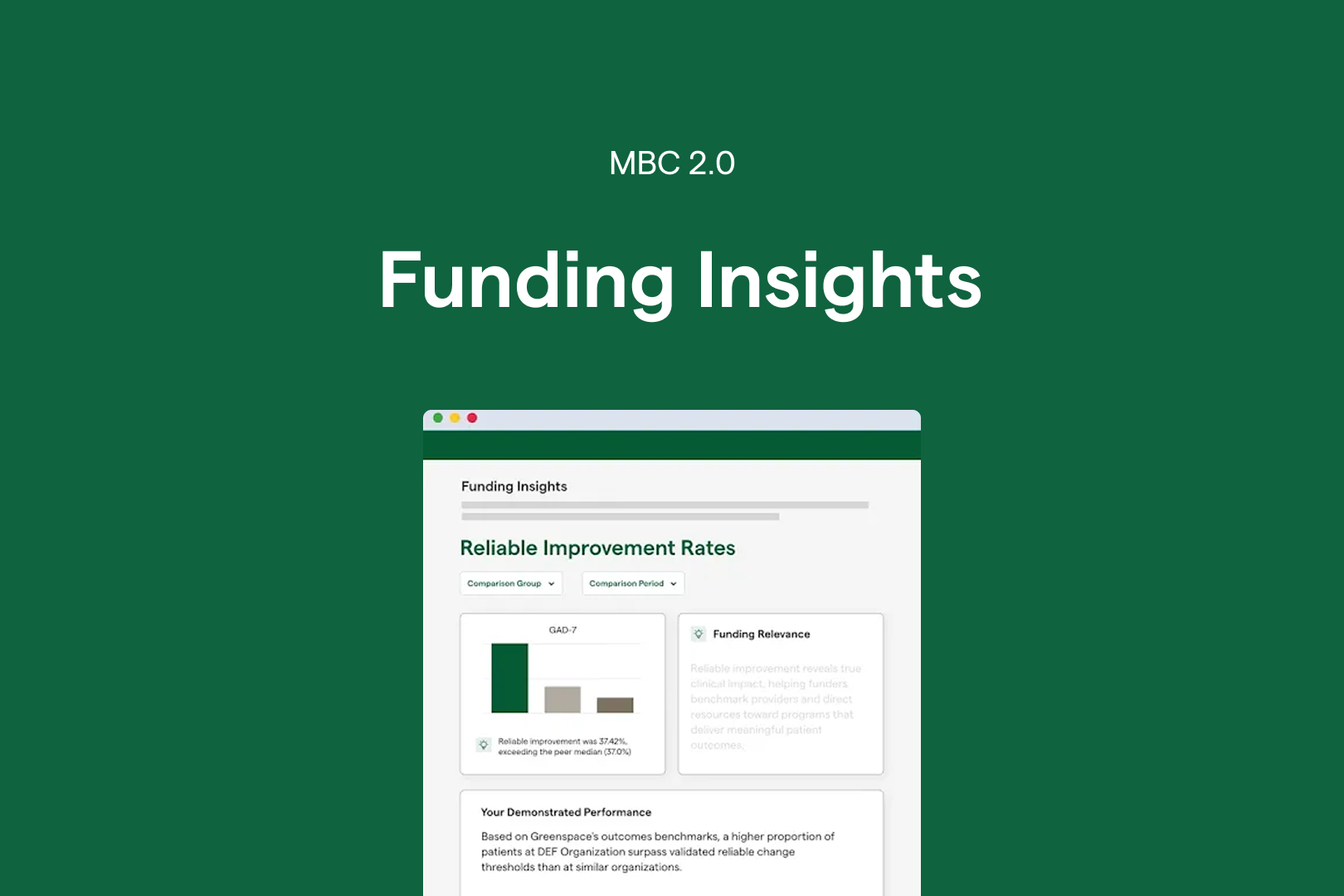
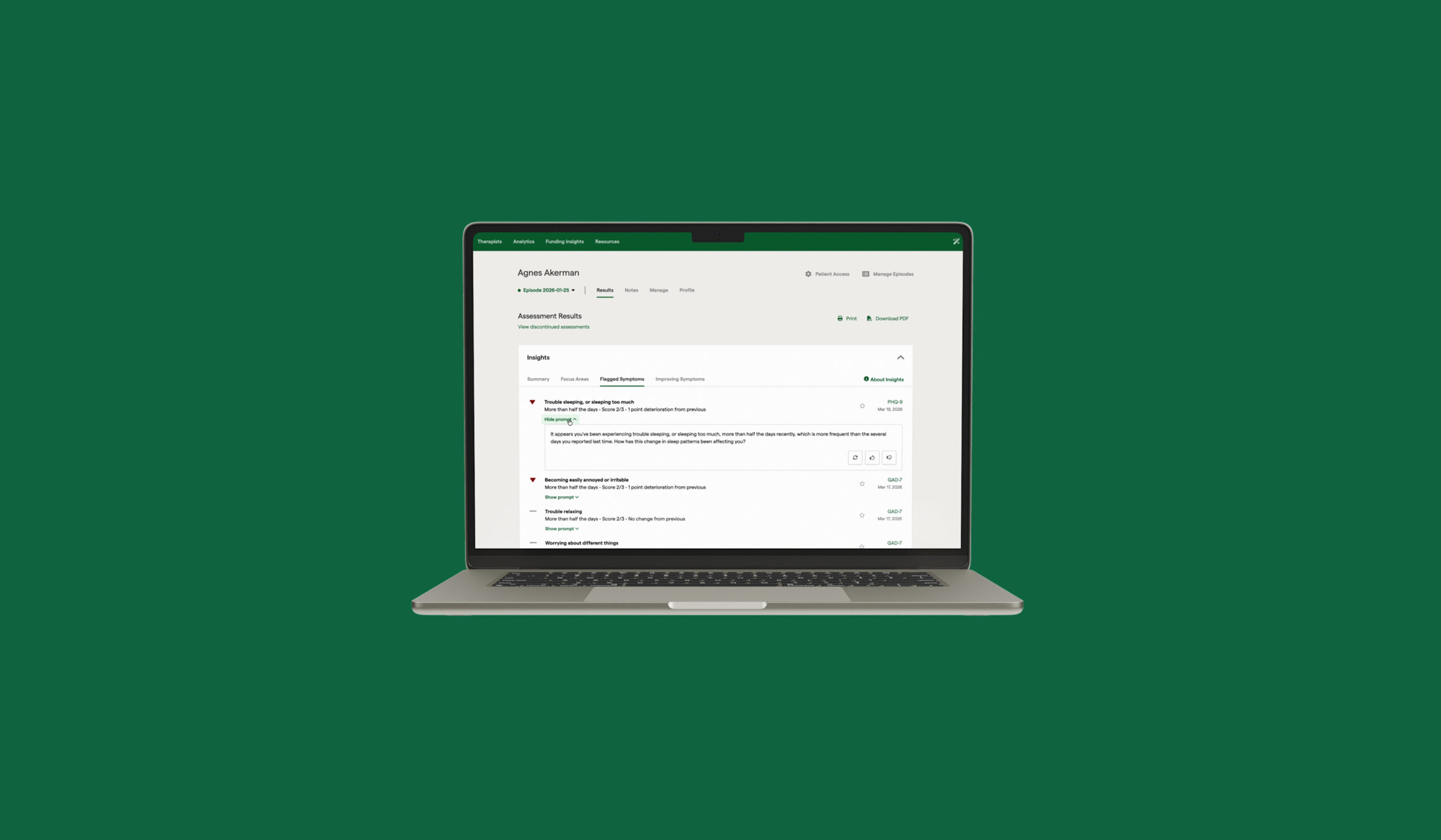
Greenspace supports this by providing the infrastructure required to operationalize Measurement-Based Care across both population health initiatives and new service models. From initial screening and baseline assessment to ongoing monitoring and outcomes tracking, Greenspace enables organizations to meet ACCESS requirements while ensuring that data remains clinically meaningful, actionable, and ready for reporting.
This includes real-time visibility into outcomes, population-level performance tracking, proactive identification of off-track clients and workflows designed to support both clinical decision-making and CMS reporting requirements. With this foundation, organizations can track performance against OAT thresholds throughout the year and make informed adjustments to improve outcomes.
A New Path Forward
ACCESS represents an opportunity to expand how mental health support is delivered, so organizations can reach more people, earlier, with scalable, outcomes-driven models of care.
For clinical and system leaders prepared to move beyond traditional service delivery, this is a critical pathway to extend impact, improve access, align with the future of value-based care and increase organizational revenue.
And at the center of it all is a clear requirement for meaningful, consistent measurement. ACCESS represents a clear shift toward outcomes-driven mental health care. Organizations that can deliver measurable improvement at scale will be best positioned to succeed under this model. This requires more than new interventions, it requires the ability to measure, monitor, and act on outcomes consistently across a population. For those preparing to participate in ACCESS or similar models, establishing this foundation is a critical first step.
Greenspace was built to address this need and has supported more than 500 organizations in operationalizing outcomes-driven mental healthcare at scale. For organizations evaluating ACCESS participation or preparing for outcome-aligned payment models, Greenspace can support readiness, implementation, and ongoing performance.
Schedule a call with us anytime to learn more or reach out at info@greenspacehealth.com.