Catholic Charities of Baltimore Improves Client Engagement, Outcomes, and ROI Through Measurement-Based Care
- The Challenge: Moving Beyond Data Collection
- Incorporating Measurement-Based Care Into Service Delivery
- Implementing for Impact: Leveraging MBC to Strengthen Client Engagement and Continuity in Care
- The Results: Driving Clinical Outcomes and Recovery
- Operational Visibility and Organizational ROI
- Building a More Collaborative Approach to Care
Organization Overview
Catholic Charities of Baltimore (“Catholic Charities”) is one of Maryland’s largest nonprofit human services organizations, delivering mental health care to tens of thousands of individuals and families across the state each year. They operate a continuum of care that spans eight outpatient clinics, residential treatment and school-based programs, serving children, adolescents, and adults facing mental health and substance use challenges, many of whom have limited access to care elsewhere.
At a Glance
3,767
Active clients
80%
Greater session attendance among clients consistently engaging in MBC
$500K
Estimated ROI of MBC through improved client engagement
48%
Average recovery rate across outcome measures
49%
Recovery rate for depression (PHQ-9)
47%
Recovery rate for anxiety (GAD-7)
138,650+
Assessments completed
10%
Increase in assessment utilization after targeted MBC training
The Challenge: Moving Beyond Data Collection
Catholic Charities had long been required to collect outcome data for reporting, accreditation, and funding purposes. However, leadership recognized that traditional approaches to data collection created administrative burden without delivering meaningful clinical value.

“We had to provide some level of outcome measures based on Joint Commission accreditation requirements and all sorts of other rules and regulations that we follow. But we also wanted to make sure that we were getting the most out of our MBC process to ensure it was effective, helpful, and useful from a client perspective. If it’s not providing value to the client, the numbers don’t really make a whole lot of sense for us to keep track of.”
Karen Kleeman-Jones · Director of Operations for Villa Maria Behavioral Health at Catholic Charities of Baltimore
The organization believed that any measurement process should work to actively improve care, help clients better understand their progress, strengthen collaboration with clinicians, and empower providers with meaningful, evidence-based information to guide their treatment decisions and clinical discussions.
Incorporating Measurement-Based Care Into Service Delivery
Catholic Charities partnered with Greenspace Health beginning in 2020 to implement MBC across its mental health services. Rather than launching across the whole organization at once, Catholic Charities took a phased implementation approach, initially beginning with one site to build champions and establish an effective implementation process, before expanding to four additional programs and locations within a few months. Now at 10 total sites, this phased rollout has allowed Catholic Charities’ clinicians to get comfortable with the process of MBC while building internal momentum and buy-in across the organization.
“We picked a couple of sites to start first with every clinician group and their clients to begin with, get comfortable with it, and then slowly expand out after that. People liked the product. They liked what it could do for them clinically, and so we didn’t have problems getting providers and leadership on board.”
Karen Kleeman-Jones · Director of Operations for Villa Maria Behavioral Health
Implementing for Impact: Leveraging MBC to Strengthen Client Engagement and Continuity in Care
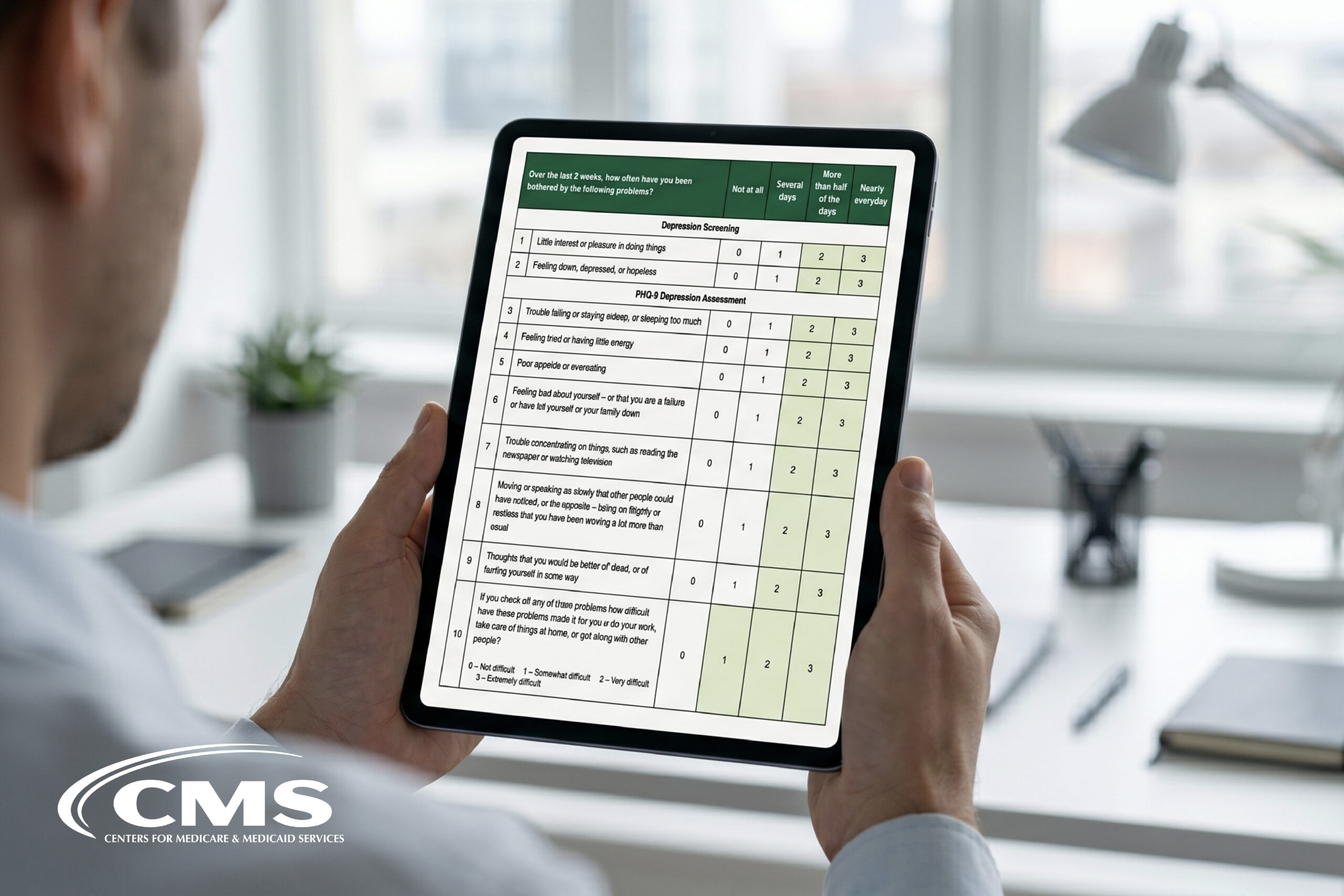
One of the most significant findings from Catholic Charities’ implementation was the impact MBC had on client engagement and continuity in treatment. Rather than treating assessments as paperwork completed between appointments, Catholic Charities integrated them directly into the therapeutic conversation. Clinicians and clients review results together, discuss changes over time, and use the data to guide treatment decisions collaboratively. That seemingly simple shift fundamentally changed how clients engaged in care.
Because clients are expected to attend therapy weekly as part of their planned course of treatment, Catholic Charities was able to compare how clients engaging in MBC followed that expected treatment cadence compared to those who were not. When leadership analyzed all clients who completed treatment over an 11-month period, they found that clients using MBC attended approximately 80% more of their expected therapy sessions than comparable clients who were not consistently engaging with MBC.
+80%
More therapy sessions attended by clients consistently engaging with MBC
~$500,000
In additional annual session revenue for the organization
Importantly, this finding was not simply about increasing utilization. Instead, leadership views the results as evidence of stronger engagement, continuity, and participation in care.
Measurement-Based Care
Interested in learning more the clinical and financial value of Measurement-Based Care?
Schedule a CallThe Results: Driving Clinical Outcomes and Recovery
As MBC adoption expanded, Catholic Charities also saw strong clinical outcomes across programs where MBC was a part of the care process. Organizational recovery metrics showed:
- 49% recovery rate for depression (PHQ-9), vs. a 38% peer median*
- 47% recovery rate for anxiety (GAD-7), vs. a 36% peer median
- 48% recovery rate on the PSC-17, vs. a 42% peer median
Recovery Rate
Catholic Charities of Baltimore
Benchmark median
Benchmark 75th
60%
50%
40%
30%
20%
10%
0%
50%
40%
30%
20%
10%
0%
49%
38%
46%
PHQ-9
47%
36%
45%
GAD-7
48%
42%
50%
PSC-17
*Peer median reflects the typical recovery rate achieved by comparable organizations using Greenspace, while the 75th percentile represents the level reached by the top-performing 25% of organizations.
The organization also leveraged Greenspace Benchmark Data to compare outcomes, engagement, and performance metrics across programs and against peer organizations using similar measures. In terms of recovery rates, Catholic Charities exceeds the peer median on every assessment.
Reliable Improvement Rate
Catholic Charities of Baltimore
Benchmark median
Benchmark 75th
50%
40%
30%
20%
10%
0%
40%
30%
20%
10%
0%
26%
27%
35%
PHQ-9
37%
37%
44%
GAD-7
25%
20%
26%
PSC-17
Catholic Charities also has consistently high adoption (90% of patients and 92% of therapists actively engaging with MBC, both well above peer medians), which points to a program that is successfully implementing and scaling MBC, and converting engagement into meaningful outcomes.
This visibility has helped leadership identify opportunities for improvement, share learnings across locations, and better understand differences in outcomes across populations and service lines. Over time, these insights have informed ongoing QI efforts, which have driven continuous enhancements in care quality, with reliable improvement rates increasing from 28% in 2020-2021 to 32% in 2024.
“We picked a couple of sites to start first with every clinician group and their clients to begin with, get comfortable with it, and then slowly expand out after that. People liked the product. They liked what it could do for them clinically, and so we didn’t have problems getting providers and leadership on board.”
Karen Kleeman-Jones · Director of Operations for Villa Maria Behavioral Health
Impact of Assessment Completion
The data also revealed a clear engagement-outcome relationship. Patients who completed more assessments over the course of treatment saw substantially larger score improvements, averaging 19% for those with just 2 assessments, climbing steadily to 37% for patients with 20 or more.
Improvement by # of assessments submitted
Score improvement (average)
40%
30%
20%
10%
0%
30%
20%
10%
0%
19%
19%
21%
26%
31%
35%
37%
2
3
4
5 to 9
10 to 14
15 to 19
20 or above
3
4
5 to 9
10 to 14
15 to 19
20 or above
Assessments submitted by patient tier
Therapeutic alliance by # of assessments submitted
Therapeutic alliance (average)
100%
75%
50%
25%
0%
75%
50%
25%
0%
84%
86%
83%
85%
85%
86%
86%
88%
1
2
3
4
5 to 9
10 to 14
15 to 19
20 or above
2
3
4
5 to 9
10 to 14
15 to 19
20 or above
Assessments submitted by patient tier
Notably, this wasn’t a function of a stronger therapeutic relationship developing over time, as the therapeutic alliance remained consistently high (83-88%) regardless of how many assessments a client submitted. Instead, it suggests that more consistent MBC engagement itself (closer tracking of symptoms, more frequent check-ins, more data used to guide treatment adjustments) is associated with enhanced clinical outcomes, independent of the strength of the therapeutic relationship.
This reinforces the case for Catholic Charities’ high patient adoption rate: it’s not just that patients are using MBC, but that sustained use over the course of care appears to compound its clinical value and impact.
Operational Visibility and Organizational ROI
Beyond clinical impact, MBC has become an important operational and strategic tool for Catholic Charities. Since implementing Greenspace, the organization has completed more than 138,650 assessments and embedded engagement and outcome data into everything from quality improvement efforts to accreditation requirements, funding applications, grant reporting and clinical supervision processes.
Catholic Charities uses Greenspace data to support:
• Grant reporting
• Quality improvement initiatives
• New funding applications
• Performance management
• Organizational benchmarking
• Clinical supervision
• Leadership reporting
• Caseload management
Catholic Charities’ leadership team also uses their organizational dashboards to monitor utilization and engagement trends across programs. For example, when leadership identified a gradual decline in assessment utilization, they increased internal conversations and training around MBC implementation. Within one month, assessment utilization increased by 10%. The organization has also leveraged newer capabilities such as Caseload Assistant to help supervisors more proactively identify clients who may require additional support or intervention.
Building a More Collaborative Approach to Care
Today, Measurement-Based Care is fully embedded within Catholic Charities’ behavioral health services. MBC has become an integral part of the care process, including how clinicians, supervisors, and leadership teams collaborate to continuously improve care delivery and outcomes.
“Measurement-Based Care can seem intimidating, but in the end it helps make treatment more transparent and effective for each client. The client and clinician are working off the same shared information, processing what’s going on together, and making sure treatment is focused on helping the client get better, because that’s the ultimate goal.”
Karen Kleeman-Jones · Director of Operations for Villa Maria Behavioral Health
Interested in learning more about Measurement-Based Care? Schedule a call with an implementation specialist or reach out anytime at info@greenspacehealth.com.