Executive Summary
The Child Development Institute (CDI) wanted to integrate outcome measurement into clinical work as a routine part of care, with minimal administrative tasks for clinical staff. By connecting Greenspaceʼs Measurement-Based Care tools directly with case management workflows in EMHware, CDI has successfully embedded routine assessment into everyday clinical practice with a subset of clients.
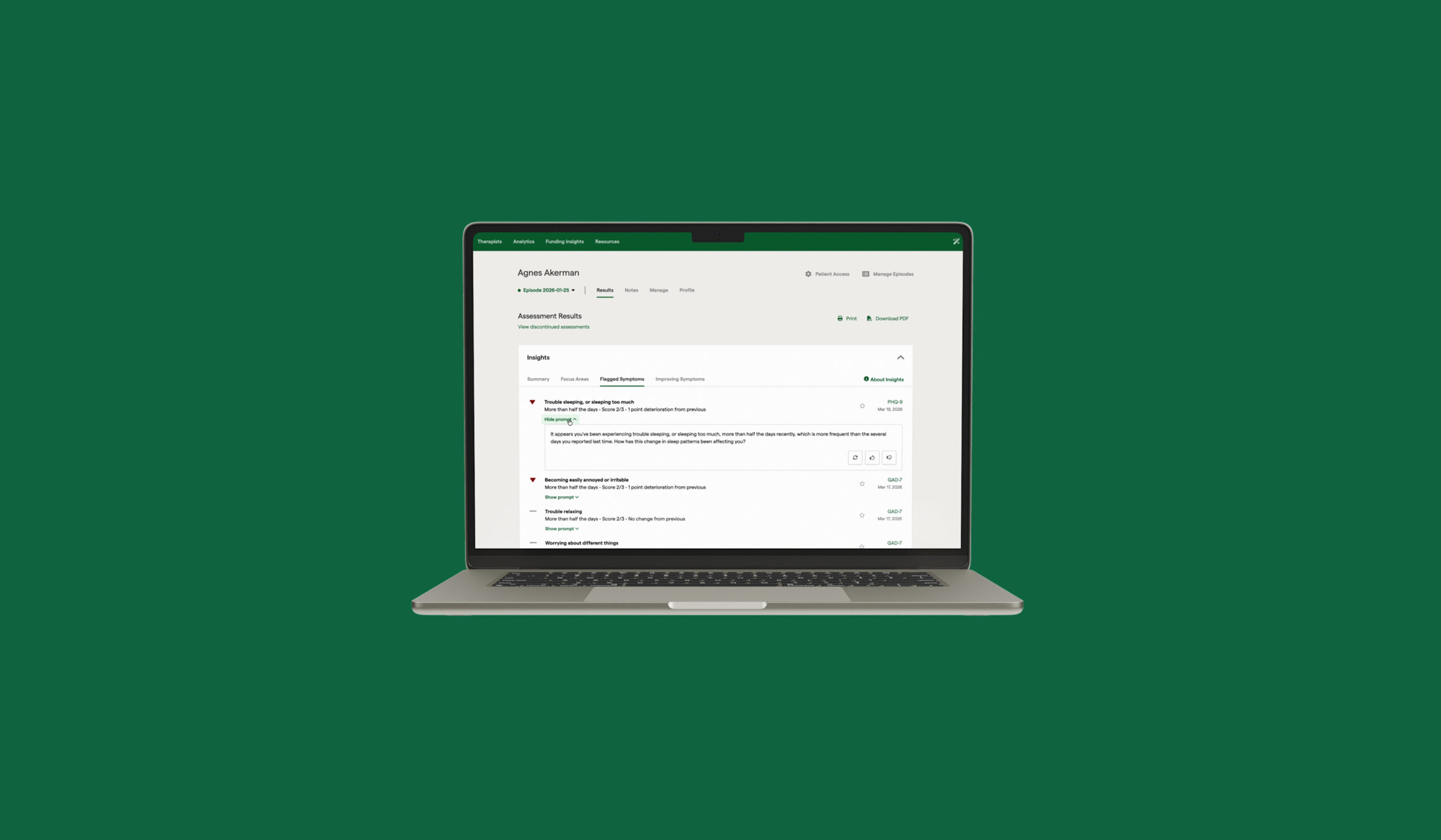
Counsellors can now monitor client progress in real time, in hopes of engaging youth and families more effectively, and leveraging insights to guide care decisions—with integrated features with the EMHware and Greenspace platforms. This integrated approach demonstrates how MBC can be scaled across child and youth mental health services in a way that can strengthen both clinical practice and system-level impact.
Overview
Across Canada, child and youth mental health organizations are under growing pressure to demonstrate impact while continuing to provide high-quality care to children, youth, and families. As expectations around accountability and impact increase, Measurement-Based Care (MBC) is becoming a foundational component of effective service delivery. However, implementing MBC in a sustainable way remains a challenge. Frontline staff need tools that integrate seamlessly into their workflows rather than add administrative burden, while organizations need better visibility into client progress and program effectiveness. At the same time, care must remain personalized, flexible, and supportive of strong therapeutic relationships.
At the Child Development Institute (CDI), MBC has become a key part of strengthening clinical practice and improving outcomes for children and families. By collecting standardized outcome measures throughout treatment, counsellors gain real-time insights into client progress and can adjust care accordingly.
This case study explores how CDI has been implementing MBC across its programs, how clinicians are using outcome data within sessions, and how the EMHware and Greenspace partnership enables organizations to capture outcome data within everyday clinical workflows without disrupting care delivery.
EMHware and Greenspace Partnership
EMHware and Greenspace share a common goal: helping mental health organizations deliver better care through tools that support counsellors and improve outcomes.
EMHware is a leading case management platform used by mental health and community organizations across Canada to manage clinical documentation, program operations, and client records. Greenspace’s best-in-class Measurement-Based Care (MBC) technology empowers organizations and providers to collect and analyze standardized outcome assessments throughout treatment to inform clinical conversations and decision-making.
Together, the two platforms have partnered to embed Measurement-Based Care directly into the systems that organizations already rely on for clinical and operational workflows. By integrating Greenspace’s assessment and outcomes-tracking capabilities within EMHware, organizations can deliver, review, and act on outcome data without requiring additional systems or manual processes.
This integration enables MBC to become a natural extension of care delivery, reducing administrative burden for counsellors while making meaningful, real-time insights accessible at both the individual and organizational levels.
As a result of this partnership, organizations can:
- Improve clinical outcomes: Real-time insights support earlier identification of risk and more responsive, personalized care
- Increase counsellor adoption: Seamless integration within EMHware workflows reduces friction and supports sustained use of MBC
- Improve operational efficiency: Automation reduces administrative effort across programs, freeing frontline staff to spend more time on client care
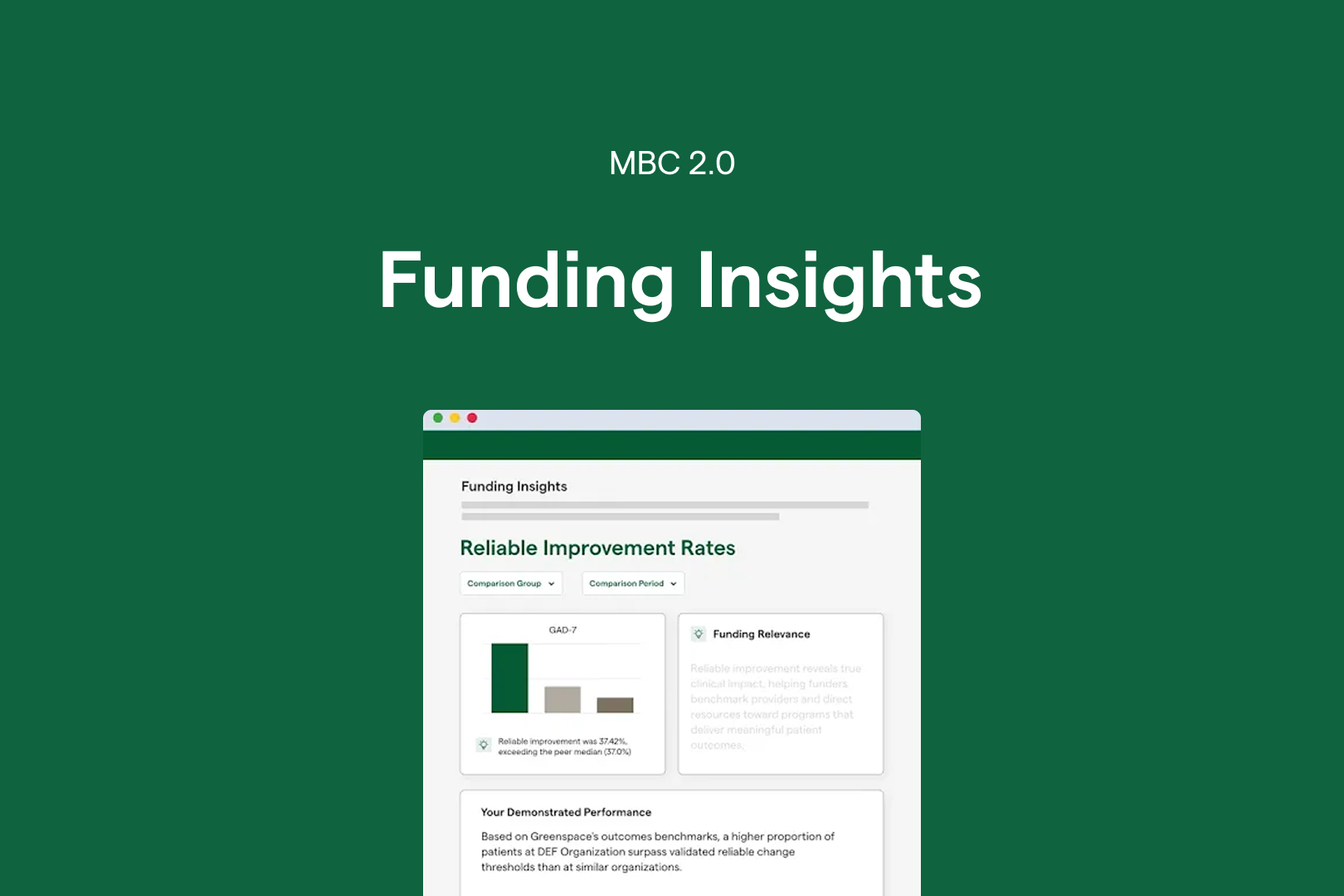
- Demonstrate program impact: Aggregated outcomes data signals program effectiveness and supports stronger reporting, funding conversations and service sustainability
Over time, this partnership has continued to evolve as organizations learn more about Measurement-Based Care and adapt their programs accordingly. The result is a collaboration that grows alongside the needs of counsellors, organizations, and the communities they serve.
Measurement-Based Care with Greenspace
See how this integration can support your organization.
Schedule a WalkthroughWhat is Measurement-Based Care?
Measurement-Based Care is an evidence-based approach to mental health treatment that involves routine collection and use of client-reported progress measures throughout treatment to guide clinical decision-making.
Rather than relying on only pre and post models of measurement, MBC introduces routine monitoring throughout the treatment timeline. Clients complete brief assessments that capture information about symptoms, functioning, therapeutic alliance, or other relevant domains. Clinical staff can then use these insights to collaborate with clients, have more informed conversations about clinical care and treatment planning, support better program evaluation, and provide organizations with meaningful data to demonstrate the impact of their services.
For child and youth mental health services, MBC may also support stronger collaboration with families. For younger children who cannot reliably complete assessments themselves, parents and caregivers can provide valuable insights into changes in behaviour, functioning, and wellbeing.
How CDI has been Implementing Measurement-Based Care
At CDI, an implementation of Measurement-Based Care (MBC) has been part of the organizational commitment to measurably improve outcomes for children, youth, and families. With the support of Senior Leadership, as well as with support from external partnership with Capitalize for Kids (C4K), the foundations were set for implementing MBC at CDI (e.g. identifying and acquiring required technological infrastructure and clinical support).
The organization has been adopting a thoughtful, phased approach to embedding Measurement-Based Care across programs, beginning with areas where empirical evidence supporting MBC was strongest (i.e., individual therapy with adolescents).
The Phased Rollout
CDI first implemented MBC as a routine protocol within individual therapy for youth aged 12 to 18, where clients were able to self-report their symptoms and functioning. Therapists began administering a protocol of standardized assessments as part of routine care, allowing CDI to test workflows, gather their feedback, and refine how measurement tools were integrated into therapy sessions.
Following the initial rollout, CDI expanded MBC across additional services while adapting the approach to meet the needs of different client populations. For much younger children, 0-to-6-year-olds, who could not fill out measures themselves, CDI focused on gathering evidence through parent reports so caregivers could share observations about their childʼs emotional functioning over time.
As a third phase, CDI investigated integrating routine measurement within group-based programs without disrupting their standardized structure, introducing session-by-session assessments within the more individualized program components.
This continuous phased rollout enabled CDI to embed MBC in a manner that supported their frontline staff and maintained program integrity, while looking at outcomes that could be clinically applicable across various age groups and service types.
Results of MBC implementation
While CDIʼs implementation is still evolving, early feedback from counsellors has been highly encouraging. Counsellors report that routine measurement helps structure therapy sessions and provides valuable prompts for deeper clinical conversations.
For some youth who have learning disabilities or neurodevelopmental differences, completing assessments can be an easier way to communicate how theyʼre doing. It can reduce the discomfort of having to immediately talk about their feelings in session and allow them to share more openly. Clinicians have also found that these measures can sometimes help structure conversations and bring up important topics that might not have come up otherwise.
Whatʼs next in MBC for CDI?
As CDI continues to advance its use of MBC, the focus is on providing support to therapists through team consultations, targeted training resources, and a quarterly cross program working group where counsellors share learnings and address practical challenges. CDI is also planning the expansion of MBC into additional services, including trauma focused and more intensive programs, while participating in a C4K-led province wide initiative to evaluate MBC implementation across child and youth mental health organizations.
Conclusion
CDIʼs experience shows that for child and youth mental health organizations, thoughtful planning and identification of needed resources (technological and clinical) are essential for the successful implementation of MBC. CDIʼs early experiences with MBC suggest that it can support counsellors in their daily work to offer effective interventions and create more meaningful connections with children, youth and their caregivers. The EMHware and Greenspace partnership has significantly reduced the administrative burden for counsellors by integrating client health records with Greenspace.
With real-time insights available within existing systems, counsellors are better equipped to guide care, engage clients and families, and make informed decisions. At the same time, CDI has strengthened its ability to measure and demonstrate impact—supporting continuous improvement and ensuring services remain effective, accountable, and sustainable.