The majority of people who need mental health support will never access it. In 2022-2023, 25% of adults in the U.S. with a mental illness did not receive treatment. For those struggling with substance use disorder, the statistic rises to 77%. The reasons are familiar: they don’t know where to start, the right resource isn’t visible when they need it, or they do find help, after their challenges have already escalated.
For organizations responsible for the wellbeing of large populations, the consequences are concrete. Untreated mental health needs frequently escalate into avoidable, high-cost events: emergency department visits, inpatient stays, and costly out-of-network claims. This gap results in people falling through the cracks or high-cost services absorbing demand that could have been addressed upstream. And without reliable data on who is struggling and what resources or services are helping people recover, it’s nearly impossible to improve.
Effective population health support needs to do three things well: reach people before challenges escalate, connect them to the appropriate support at the right time, and empower organizations and health systems with the data and insight they need to identify gaps in their care continuum to inform continuous quality improve. That’s exactly what Greenspace’s Population Health solution is built for.
What is Greenspace’s Population Health Solution?
Greenspace’s Population Health Hub is a single digital front door that screens, triages, and connects populations to the right mental health support at the right time. Through evidence-based check-ins, personalized resource recommendations, and real-time analytics, the Hub helps individuals understand and act on their mental health while giving organizations the insight they need to close gaps, improve outcomes, and continuously strengthen their mental health offering.
We’ve recently made significant updates to the platform in order to build on this foundation, rethinking the end-to-end experience to make it more intuitive for individuals, more actionable for care teams, and more impactful across complex populations.
What’s New in Population Health
1. Turning Data Into Meaningful, Person-Centered Insights
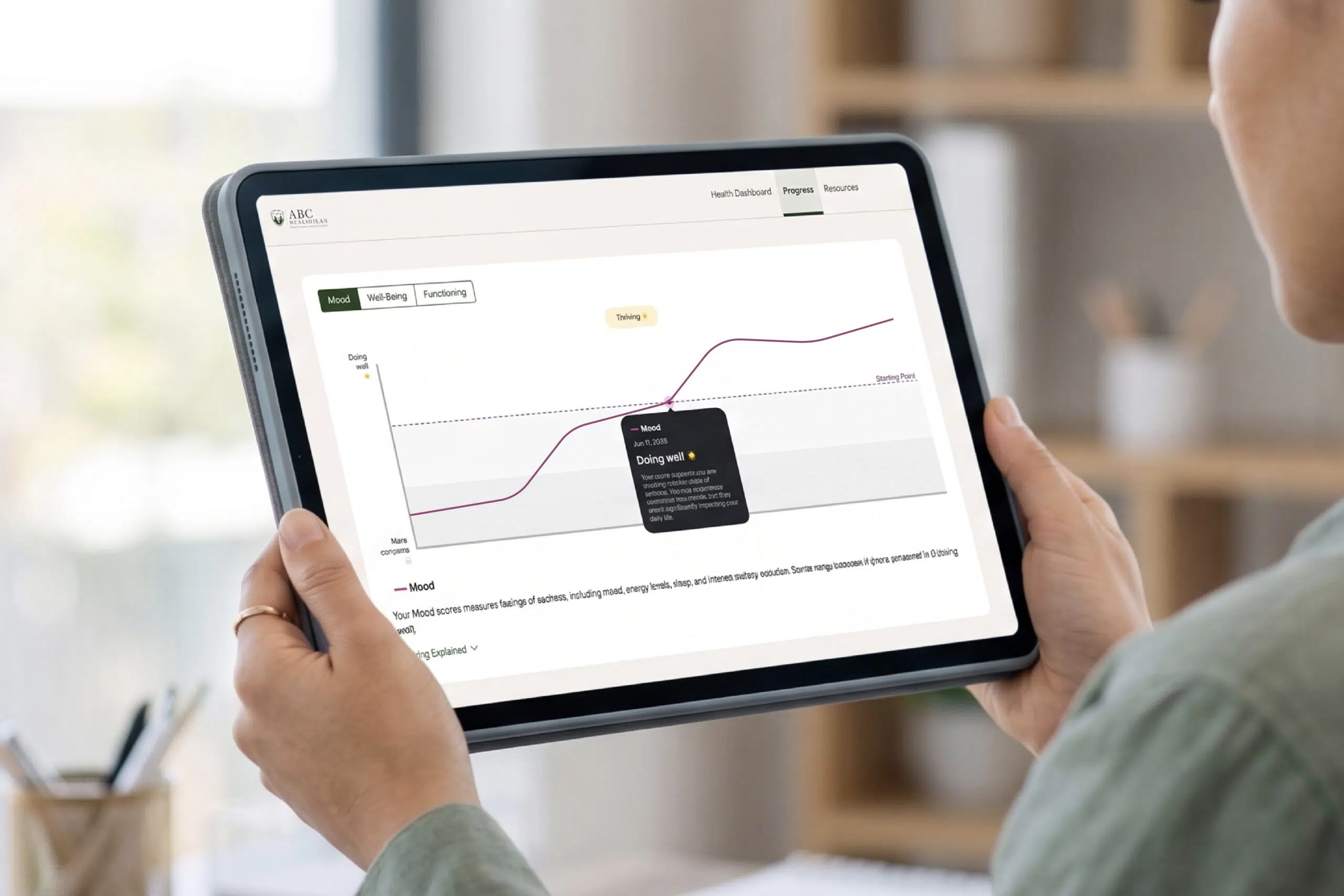
Assessment data becomes a valuable tool for recovery when users can leverage their insights to better understand their mental health and what is contributing to their symptoms. Our redesigned results experience takes this one step further, by translating check-in data into clear, personalized insights. The platform now delivers:
- Plain-language summaries that explain baseline results across domains like mood, wellbeing, and daily functioning
- Change-over-time insights that highlight what’s improving or worsening since each users’ last check-in
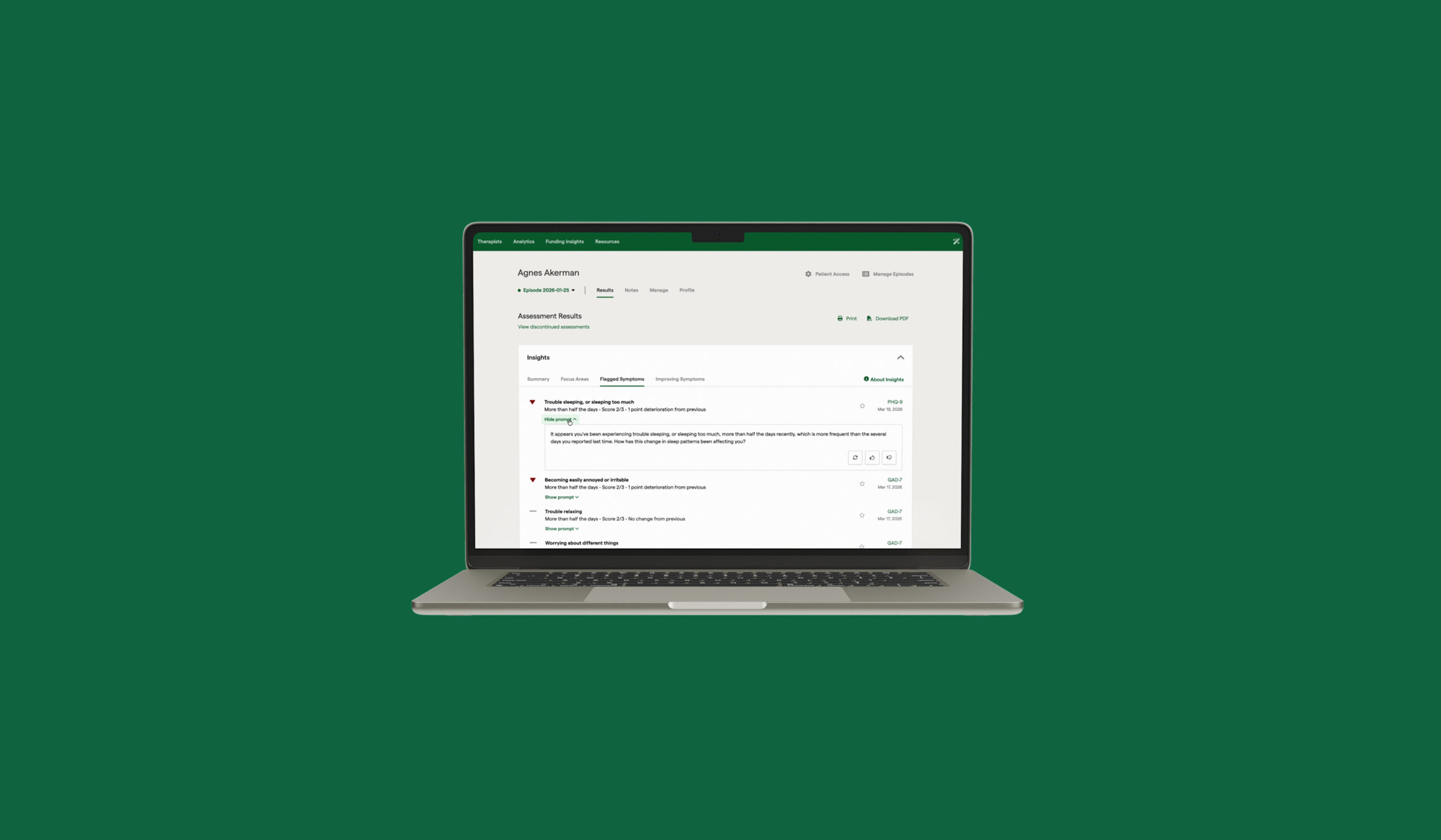
- Itemized-assessment result insights that surface the specific issues influencing a user’s challenges
- High-acuity pathways that prioritize urgent needs with clear, guided next steps, support options and automated follow up
Every interaction is designed to help members better understand their mental health, what’s influencing any positive or negative changes, and what steps they should take to improve their well-being. 70% of Hub members choose self-guided resources over 1:1 clinical services when the right options are available, and those individuals show an average symptom improvement of 19% without ever accessing clinical care.
The impact of this shift is tangible. Members who can meaningfully engage with their mental health are more likely to return for follow-up check-ins and act on recommendations. Early warning signs become easier to identify, both for care teams and for individuals themselves. Organizations see stronger repeat engagement and more meaningful, measurable follow-through on high-risk cases, supported by both research and implementation data showing that users who complete more bi-weekly check-ins over time show significantly greater symptom improvement.
2. From Insight to Action: Building an Engagement Engine
Knowing how you’re doing is only the first step. What makes population health programs effective is what happens next: the behaviors users build over time and the small actions that compound into meaningful change.
Platform enhancements introduce a dynamic engagement layer that transforms every check-in into an opportunity for reflection, goal-setting, and progress-tracking:
- Curated goal-setting tied to key domains like sleep, activity, social connection, and care engagement that are most likely to drive improvement, customized for each specific population
- Guided reflections that help members connect their results to real-life experiences in order to better understand what is impacting their wellness
- Progress tracking that reinforces and celebrates improvement over time
- Milestones and recognition moments that encourage consistency and return visits through gamification
- Smarter resource discovery combining intelligent search, AI-powered recommendations, and behaviour-driven suggestions
The experience evolves with each interaction, becoming more relevant and personalized as users continue to engage with the Hub.
This shift from information delivery to sustained engagement has a measurable difference on outcomes. Greenspace’s Population Health Hub data shows a 43% 30-day user retention rate, significantly higher than the average of 3–6% within most self-guided, digital mental health tools. Members leave each Hub session with a clear next step to guide them towards improving their mental health. Organizations benefit from higher participation, stronger habit formation, and measurable improvements in both outcomes and experience across their population.
3. Expanding Access: New Front Doors to Care
Reaching the people who most need mental health support requires more than a single access point. Greenspace’s updated Hub introduces multiple flexible entry points designed to meet individuals where they are:
- Digital screening programs delivered via email, SMS, member/population portals, and partner channels that allows for data to be collected across different vendors and settings, all channeled into one data warehouse and reportable dashboard;
- Assessment-first onboarding that reduces friction by allowing members to experience the value of ongoing assessment completion before creating an account, driving significant improvements in assessment completion rates;
- Simplified, plain-language onboarding journeys specifically designed for unique population like older adults, Medicare members, children and youth and more;
- AI-powered voice outreach that enables phone-based screening and engagement for members less comfortable with digital tools; a critical capability for Medicare populations, older adults, and populations with lower digital adoption rates;
All pathways feed into a unified Hub and dataset, ensuring that no matter how a member first engages, their experience and outcomes are consistently tracked.
The reach implications are significant. In Greenspace’s implementation data with Wellness Together Canada (WTC), 28% of individuals who engaged with the Population Health Hub reported they would not have accessed any mental health support at all without it, and 18% said they would otherwise have turned to emergency or urgent care services. By creating more accessible front doors, organizations can meaningfully reduce pressure on high-cost downstream services while connecting people to appropriate, lower-intensity support earlier in their mental health journey. In the case of WTC, this led to an estimated $36M reduction in healthcare costs by redirecting visits that would have went to the ER, walk-in-clinics, or family physician, to appropriate mental health resources and timely support.
4. A Unified Command Center for Population Health Teams
Population health teams are only as effective as the objective information available to them. The updated platform introduces a centralized analytics and insights layer that gives population health, quality, and care teams a real-time view of what’s happening across their population. Teams can now:
- Monitor population-level trends in symptoms, engagement, and risk;
- Identify and proactively surface high-risk individuals for early intervention;
- Capture where in your pathways members are disengaging from care and helps to reengage them;
- Evaluate the effectiveness of specific campaigns, resources, and outreach strategies;
- Surface gaps in care across geographies or demographic groups to inform continuous quality improvement;
- Align around a shared, real-time, holistic understanding of your populations wellness and where the most significant challenges lie
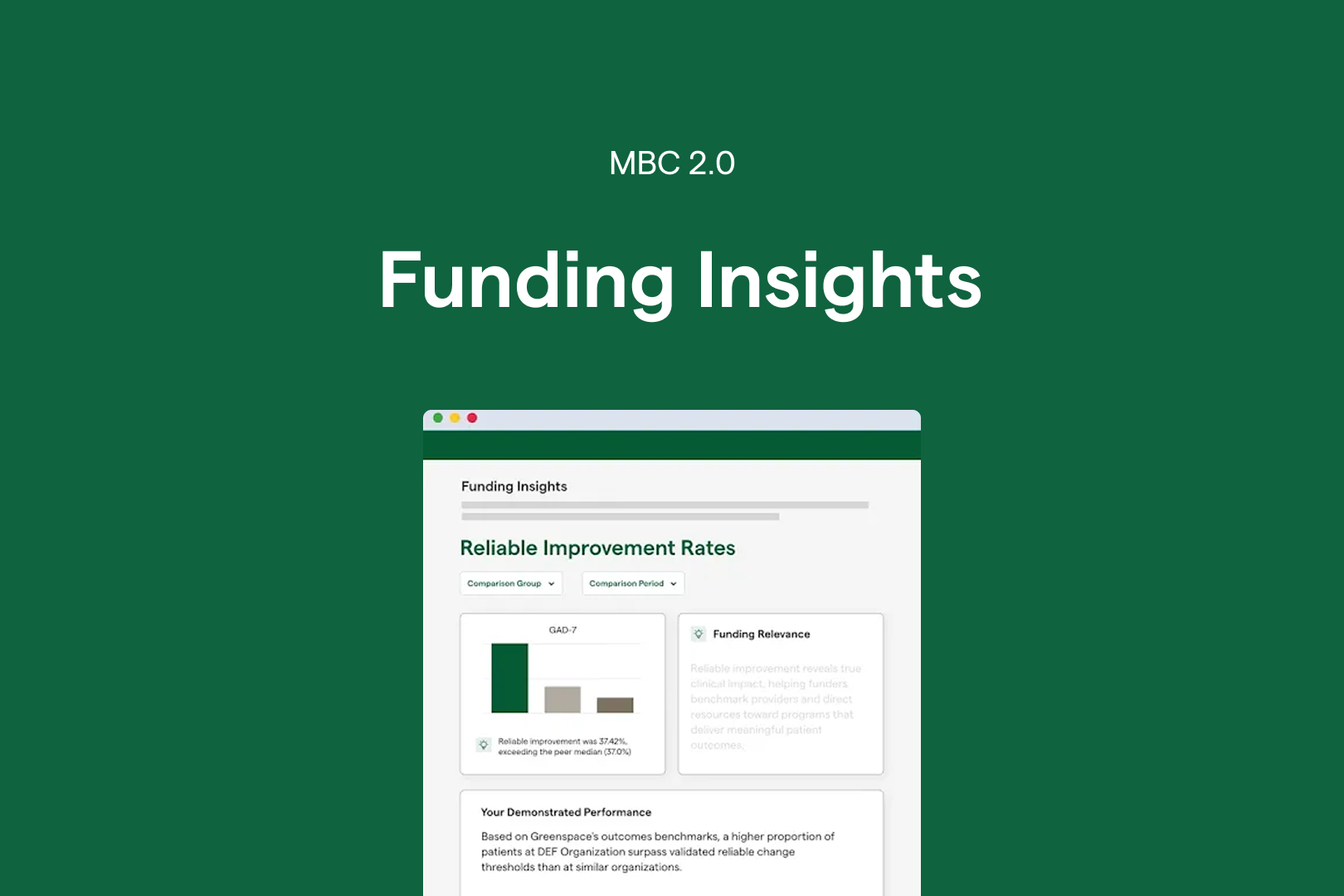
The focus goes beyond reporting to deliver actionable insights. When organizations can see which supports are driving improvement and where gaps exist, they can make faster, better-informed decisions about where to invest to best support their populations specific challenges. This is especially powerful in quality-focused contexts: for Medicare Advantage plans, the platform’s real-time visibility into outcomes and engagement directly supports performance improvement on CMS Star Ratings measures.
Our intake forms asks students what brought them into counseling, and we’ve had students report that the WellU platform suggested they make an appointment based on their check-in results. Those students maybe wouldn’t have come until things got much worse… but because the platform suggested it, they made their 1:1 care appointment and received the help they needed.
Bringing It All Together
Each of these updates is meaningful on its own. But the real power is in how they work together.
Better insights drive stronger engagement. Stronger engagement generates richer data. Richer data enables more responsive outreach and smarter resource investment. And all of it connects back to the user, making every interaction more relevant and more useful over time.
The organizations and health systems closing the mental health access gap won’t do it by adding more point solutions. They’ll do it by building a smarter, more connected infrastructure that reaches their populations earlier, guides them to the right support, and gives teams the data to continuously improve.
Whether you’re a health plan looking to improve Star Ratings, a health system aiming to reduce downstream costs, a school district supporting student wellness, or an employer building a more resilient workforce, schedule a call to see what’s possible.