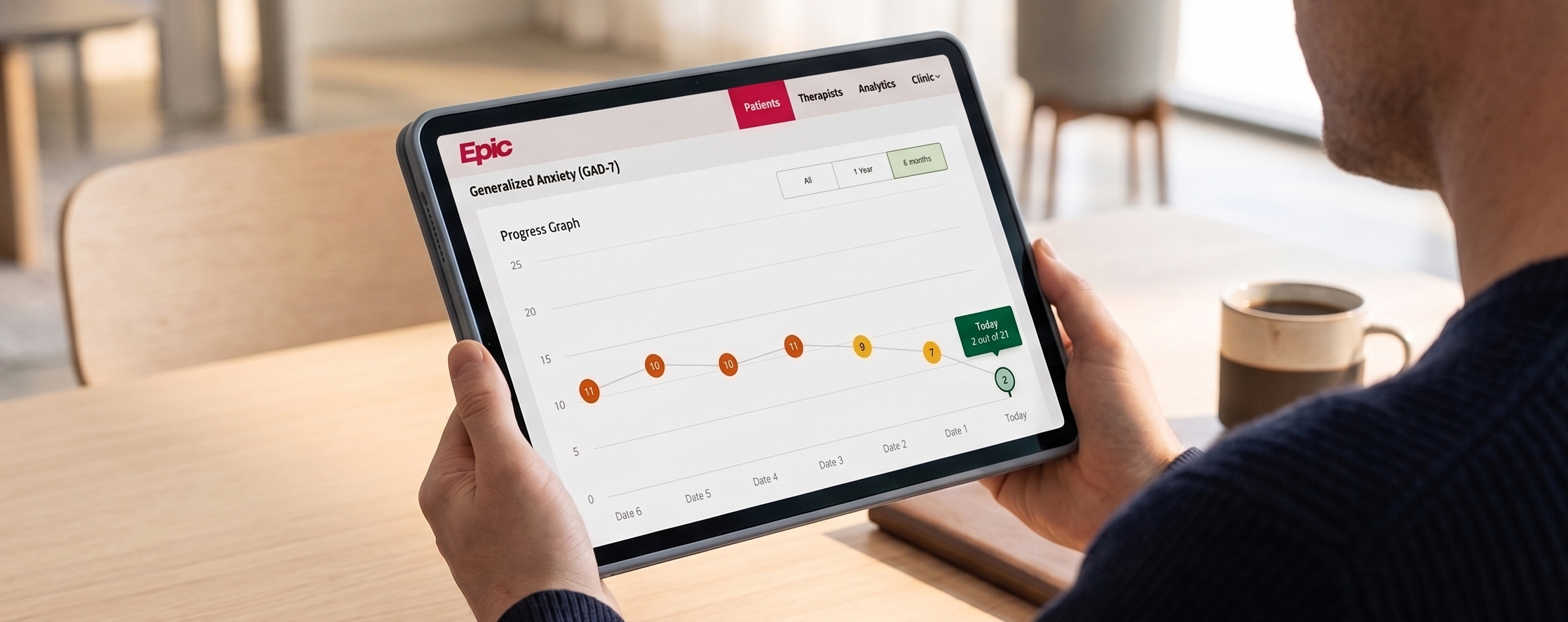
Measurement-Based Care (MBC) is a clinical practice where standardized, evidence-based measures are used regularly throughout treatment to track client progress and inform care decisions.
In physical health care, this approach is routine. For example, people managing diabetes regularly track blood glucose levels, review trends over time, and use that data to guide treatment decisions with their care team, helping ensure issues are identified early and nothing is overlooked.
Historically, mental health care hasn’t relied on data in the same consistent way. That’s changing as organizations adopt MBC to improve transparency, strengthen quality improvement efforts, and support value-based care models. With MBC, clinicians and clients can clearly see whether treatment is working, adjust care when progress stalls, and make more informed decisions together.
For example, our partners at Homewood Health use Measurement-Based Care to better understand client experiences and identify opportunities for improvement across programs. By embedding MBC into routine care, they support over 13,000 individuals and families each year and have achieved an average symptom improvement score of 74%.
When it comes to mental healthcare, data hasn’t historically been used in the same way. But, the tides are shifting as providers implement Measurement-Based Care into practice, due to a clear focus in behavioral healthcare on transparency of outcomes, quality improvement, and value-based care discussions. As an example of Measurement-Based Care in practice within a mental health setting, our partners Merakey are using MBC to get the information they need to understand their clients’ experience and identify areas for improvement across their programs. In doing so, they are able to provide tailored, high-quality care to more than 50,000 individuals and families across the U.S. each year.
Learn more about Measurement-Based Care